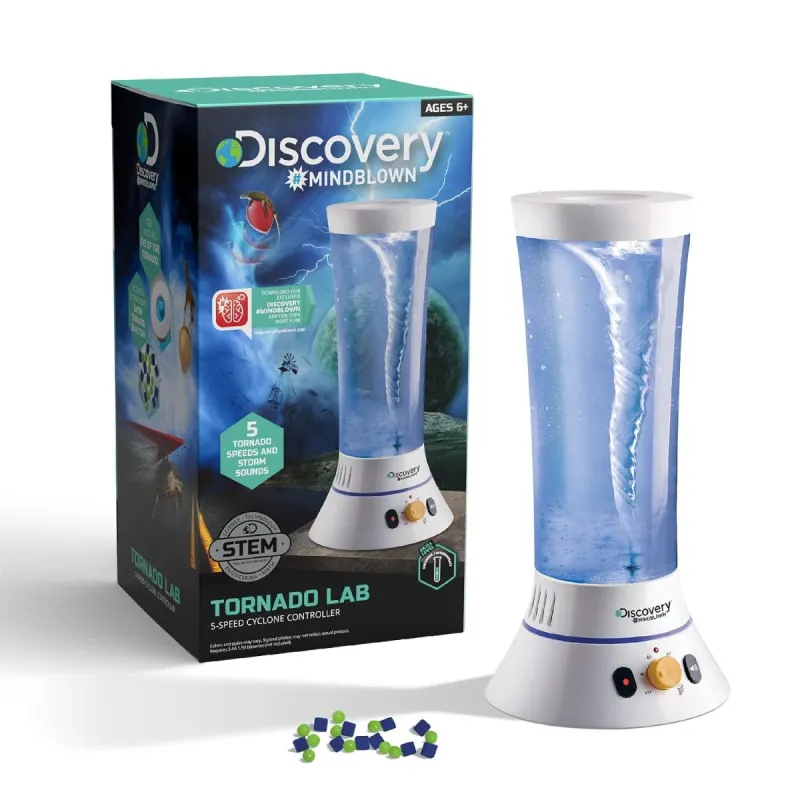
Tornado Science Kit: A Tabletop Storm You Can Dial Up
The Discovery Tornado Lab is a tornado science kit that builds a real, spinning vortex inside a clear chamber on your table. Plug it in, switch it on, and a column of air starts twisting while storm sounds rumble underneath — a realistic visual and audio storm experience.
Most weather toys explain a storm with a diagram. This one lets kids watch it happen. They take the five-speed controller, push the cyclone from a lazy swirl to a full roar, and see the shape change in real time. That is the moment meteorology stops being a vocabulary word and becomes something they can see, hear, and steer.
What Makes This Storm Chamber Stand Out
- Five intensity speeds: One controller takes the vortex from a gentle spin to a full-force cyclone, so kids can compare how a storm builds.
- Reusable storm debris: The included debris gets swept into the funnel, letting kids track the force of the storm and then run the whole thing again.
- Realistic storm audio: Built-in thunder sounds turn a quiet table into a weather event worth watching.
- Plug in and go: A 12V adapter is included, so setup takes minutes and there are no batteries to hunt down.
- Mess-free learning: The kit is great for mess-free educational play at home, in a classroom, or as eye-catching science fair decor.
- Ages 6 and up: Designed for boys and girls who are ready to explore weather physics hands-on.
Who It Makes a Great Gift For
This is the gift for the kid who takes the flashlight apart to see how it works. If you are shopping for a birthday, a holiday morning, or a reward for a report card that finally came home with a science grade worth framing, the Tornado Lab gives a six-year-old and a ten-year-old something to argue over in the best way. Grandparents tend to love it because there is nothing to assemble and no batteries to remember: you hand it over and the show starts.
Teachers have a different use for it. A five-speed cyclone controller makes a weather unit stick in memory, and the reusable debris turns "how do storms pick things up?" into a demonstration the whole class can watch at once. It also earns its spot at a science fair table, where a spinning funnel does the recruiting for you. For a Secret Santa or a classroom gift exchange, it beats another plastic trinket.
What's Worth Knowing Before You Buy
A few honest notes. This is a plug-in toy, not a battery one, so you will want a free outlet near the table where it lives — the 12V adapter comes in the box, the outlet does not. It is aimed at ages 6 and up, which makes it a poor fit for toddlers who would rather grab the debris than study it. And it is an indoor tabletop activity: the fun is in watching and experimenting, not in a kit that sends anything flying around the room. The listing also skips a full spec sheet, so if shelf space is tight, double-check the size before you commit.
If you want a gift that keeps getting played with long after the wrapping paper is gone, put the Discovery Tornado Lab on your list and have it ready for the next birthday or holiday morning.